Islamic wall art and du'a cards
Qur'an verses, Arabic words and Islamic geometry. Framed, on paper or on canvas, from £29.
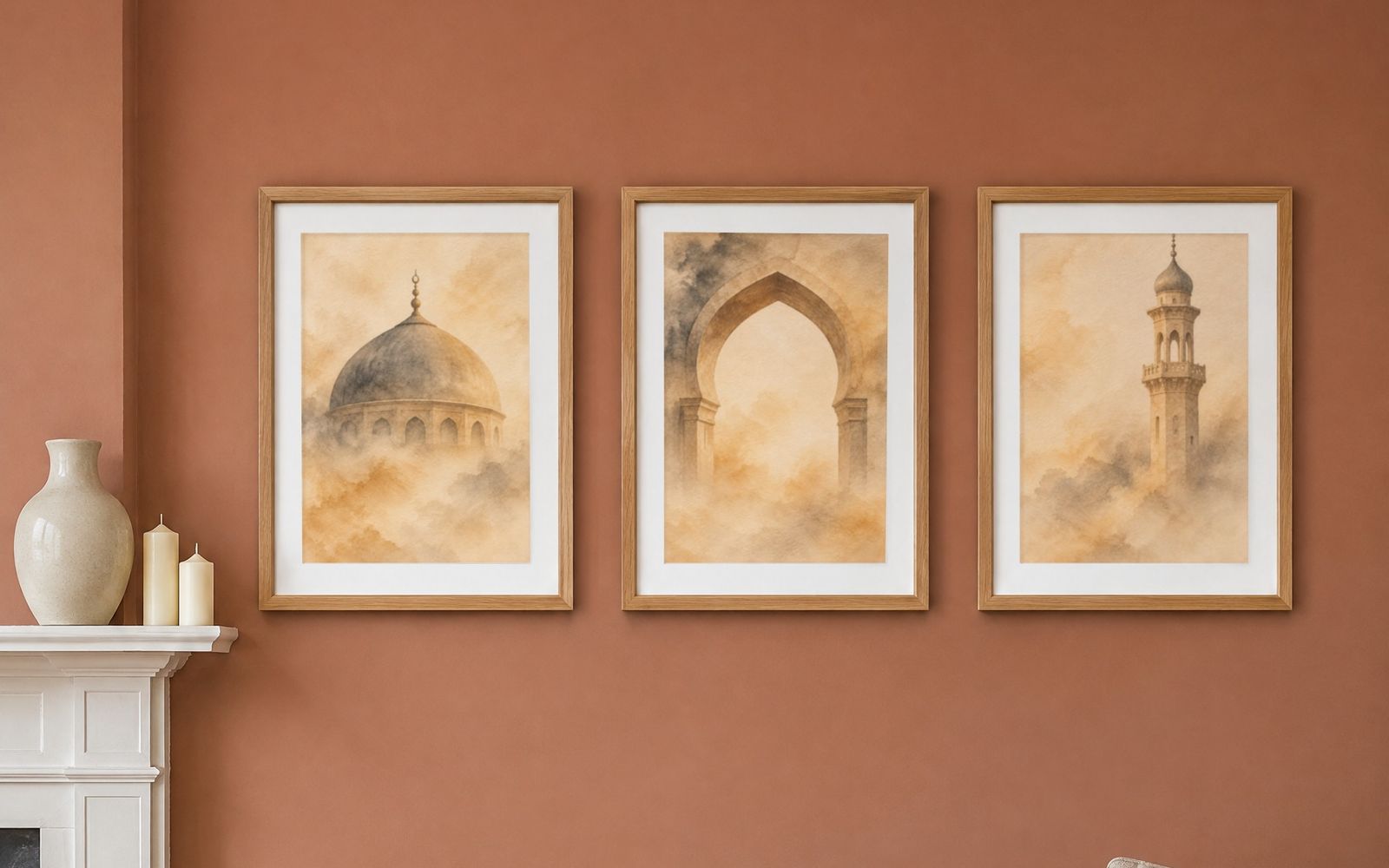
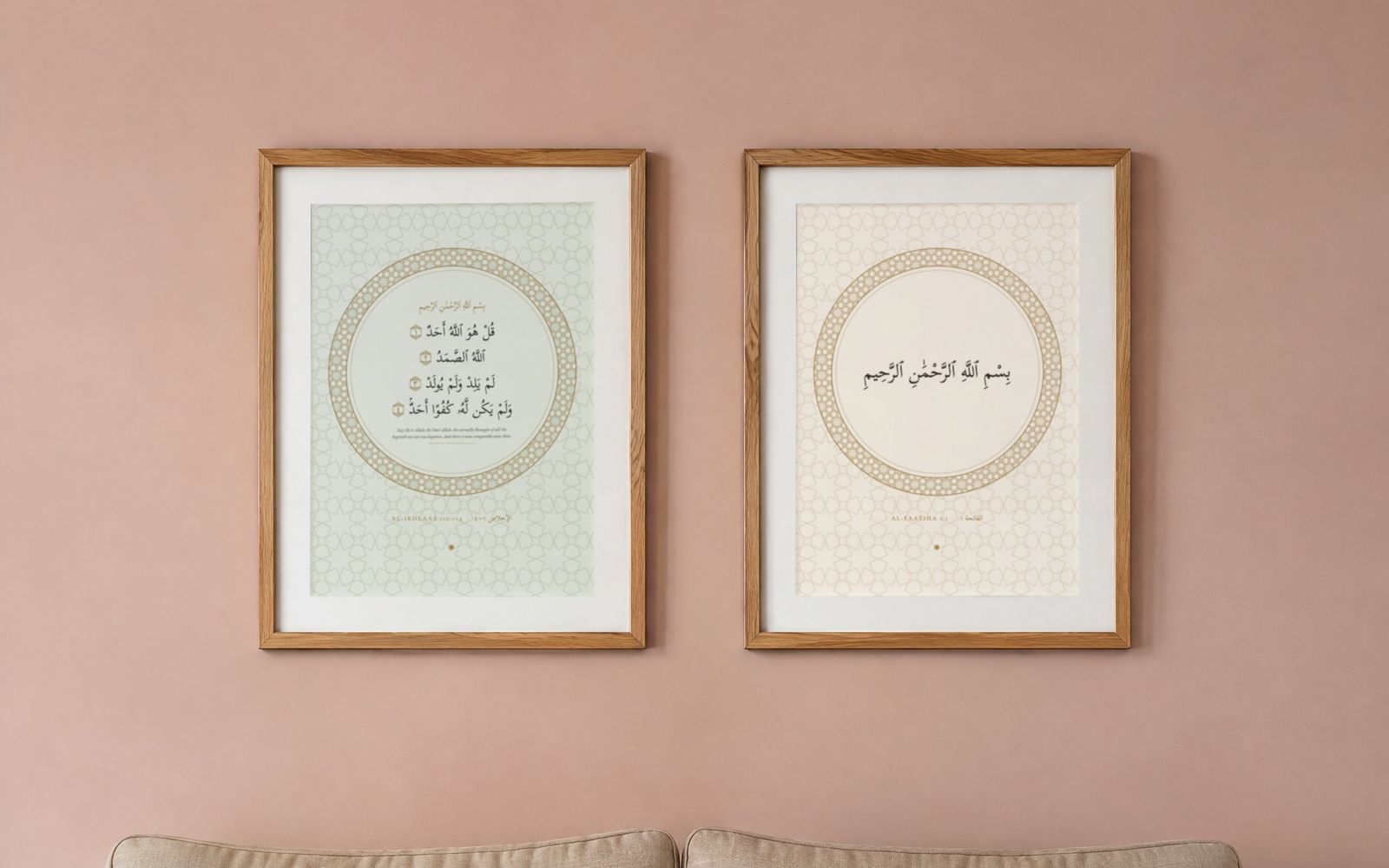
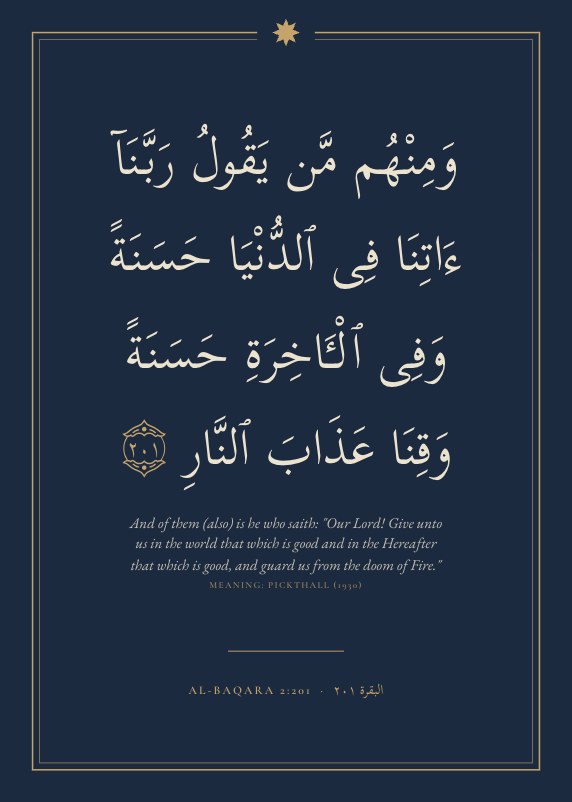
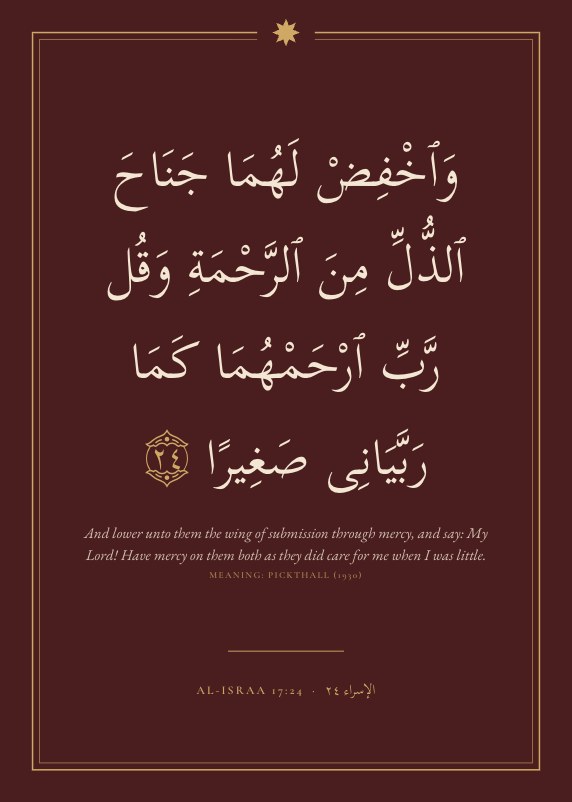
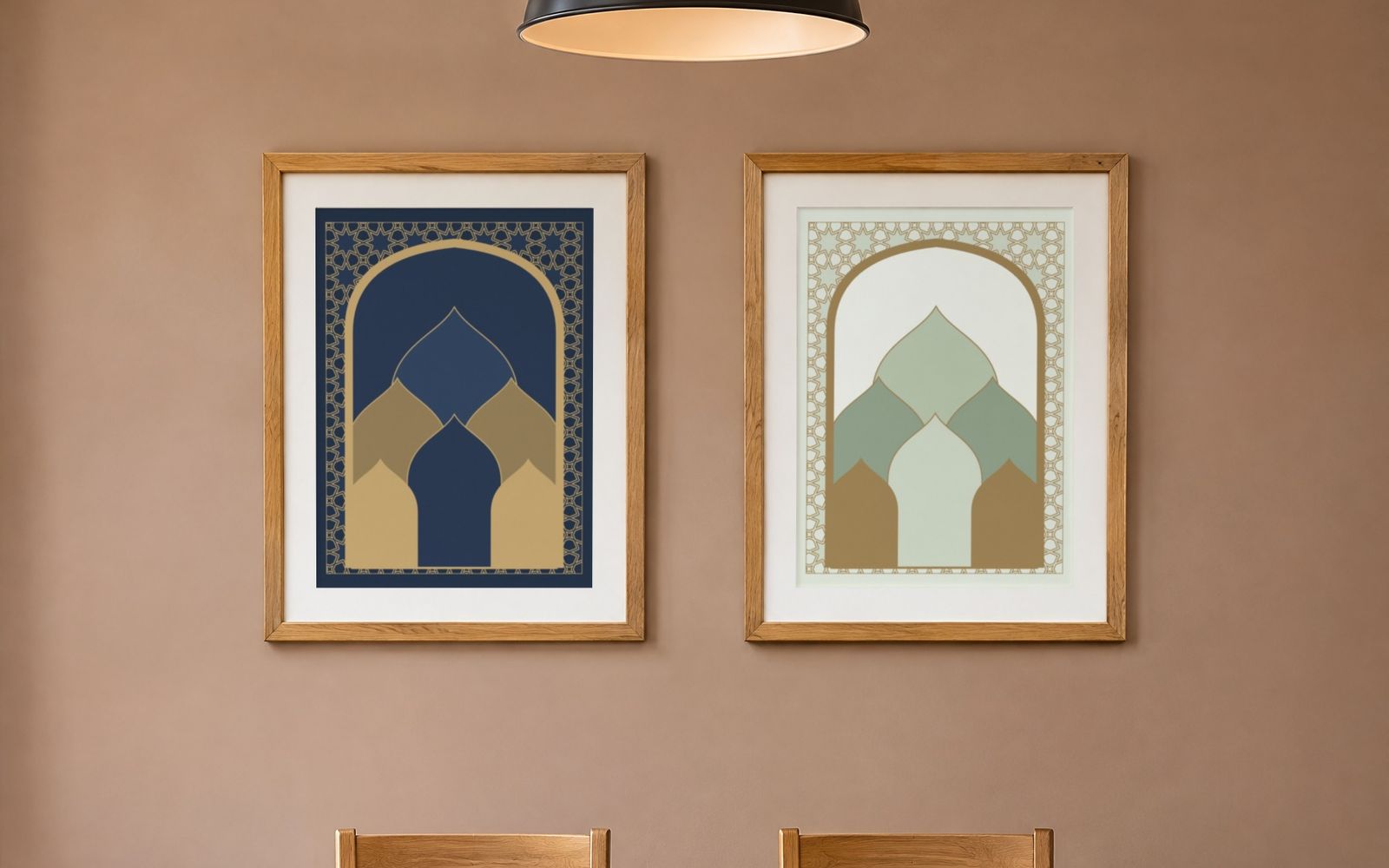
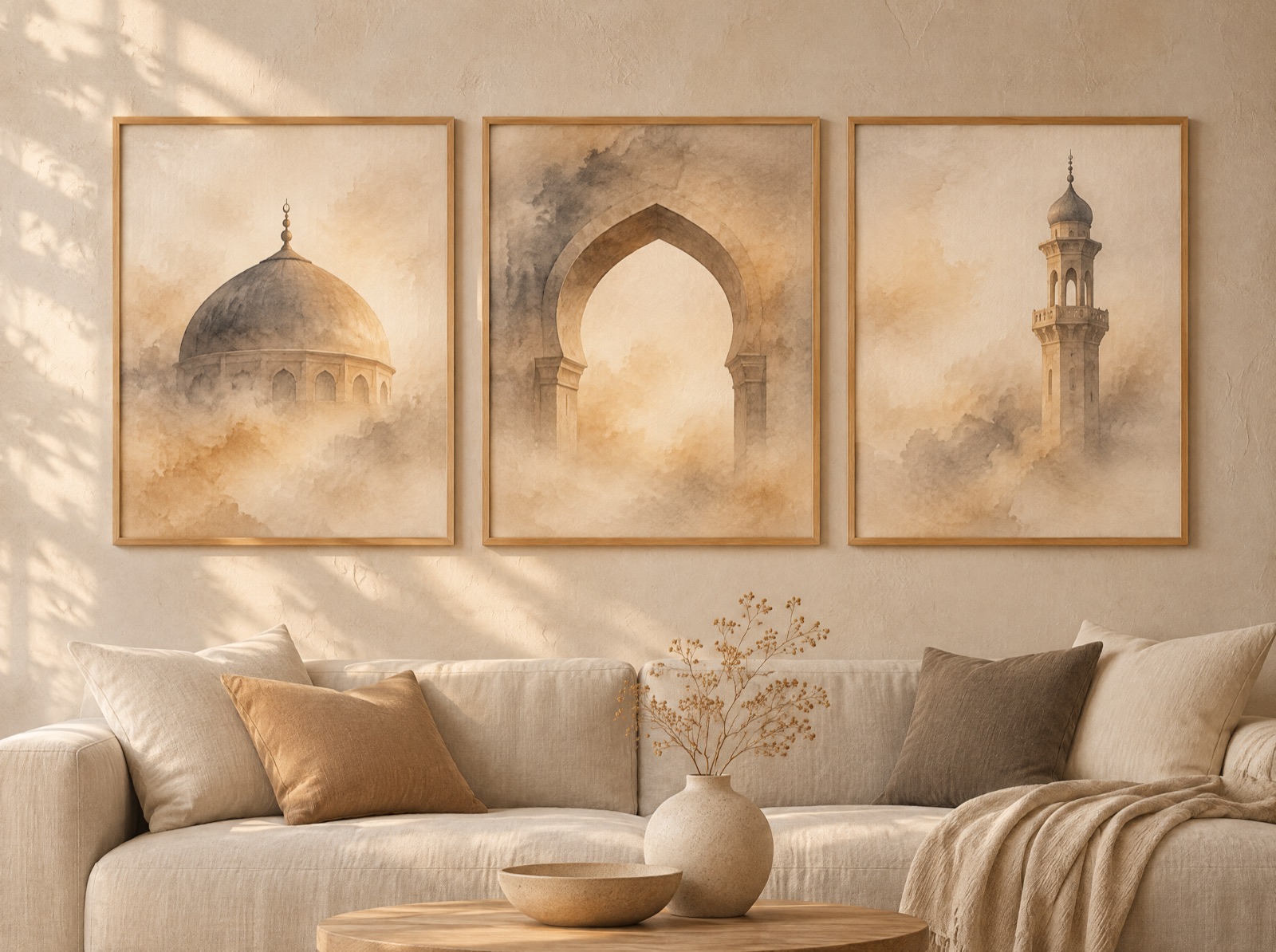
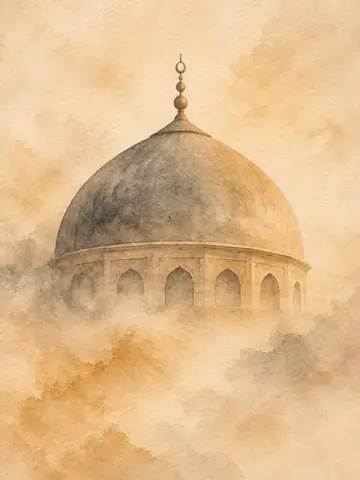
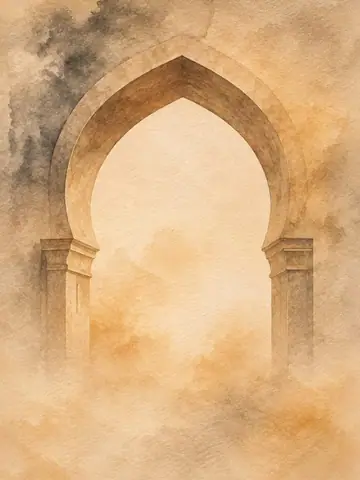
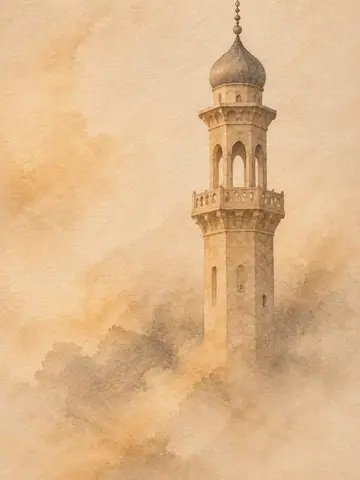
Living room wall · Mist trio: dome · arch · minaret · Shop Mist
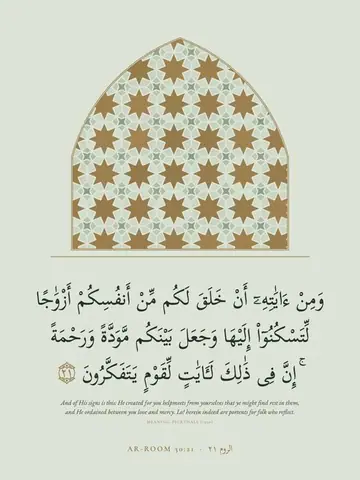
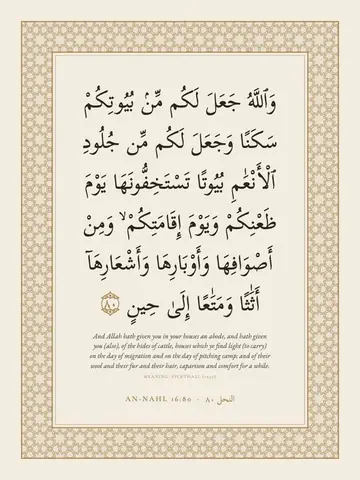
Sakinah · for the Muslim home
Islamic wall art and du'a cards
Qur'an verses, Arabic words, children's names and Islamic geometry. Framed, on paper or on canvas, from £29.
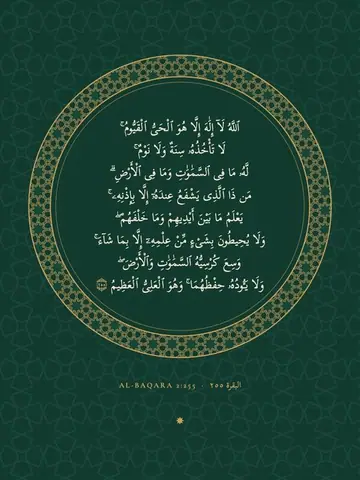
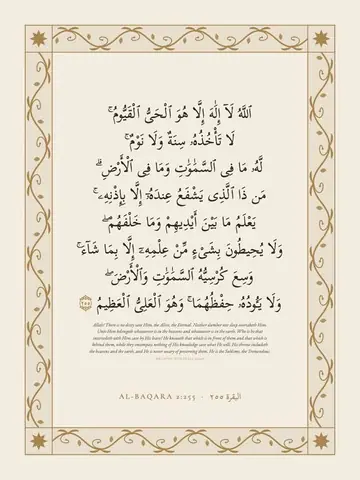 Ayat al-Kursi, arabesque frameS02 · From £29
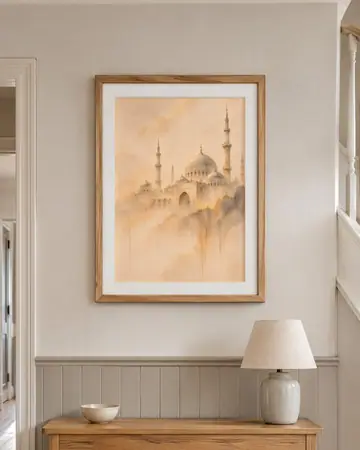
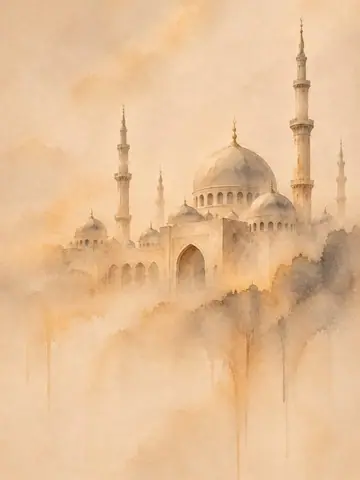 Mosque in mist, warm sandS91 · From £29
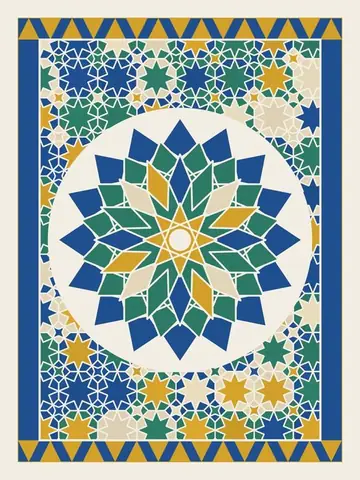 Zellige medallion, cobalt and saffronS99 · From £29
Sakinah · for the Muslim home
Islamic wall art and du'a cards
Qur'an verses, Arabic words, children's names and Islamic geometry. Framed, on paper or on canvas, from £29.
Sakinah · for the Muslim home
Islamic wall art and du'a cards
Qur'an verses, Arabic words, children's names and Islamic geometry. Framed, on paper or on canvas, from £29.
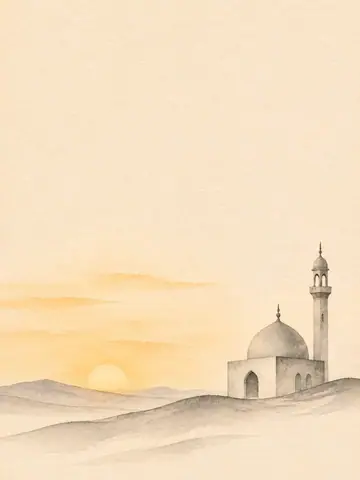
Mosque in mist, warm sand · From £29
Collections
 Wall artVerses, words and geometryFramed prints, fine-art prints and canvas, from £29. Zellige patterns to Mist watercolours. Shop wall art → Du'a cardsKeepsake du'aTwelve du'a from the Qur'an on Mohawk 324 gsm recycled card. Sets of 6, 12 or 24, from £9.Choose your cards → Make your ownAny verse, word or nameChoose the text, the style and the colours.Start designing →
Wall art
A few to start with
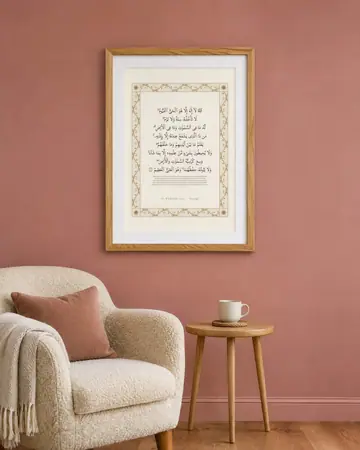 Ayat al-Kursi, arabesque frameAl-Baqara 2:255From £29Print · Hahnemühle Photo Rag 308 gsm
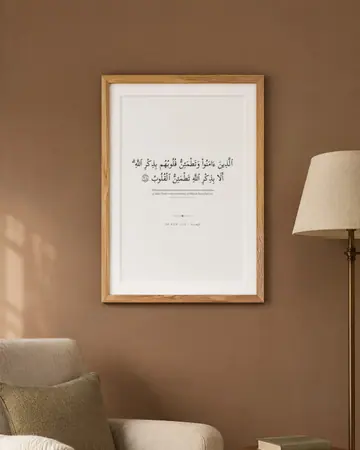
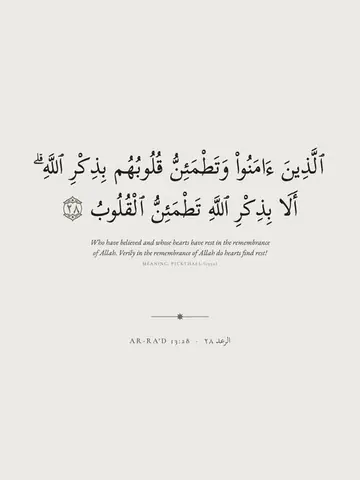 Hearts find rest, minimalAr-Ra'd 13:28From £29Print · Hahnemühle Photo Rag 308 gsm
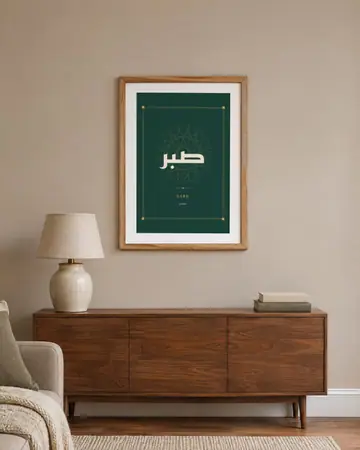
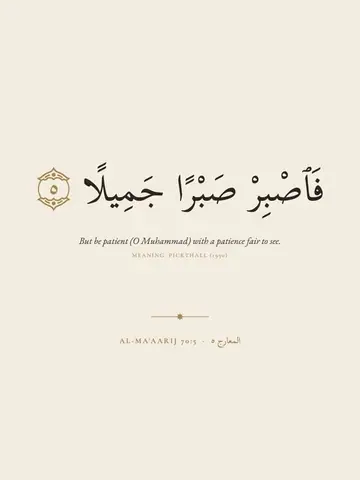
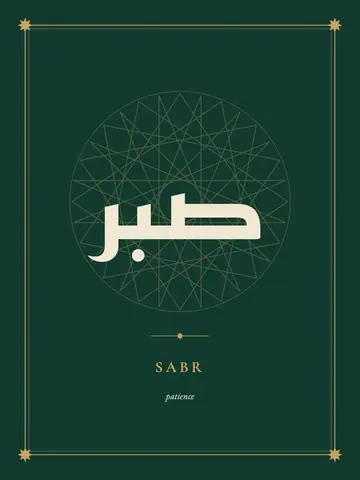 Sabr, patience (Kufi)Sabr, patienceFrom £29Print · Hahnemühle Photo Rag 308 gsm Mosque in mist, warm sandWatercolour, no textFrom £29Print · Hahnemühle Photo Rag 308 gsm
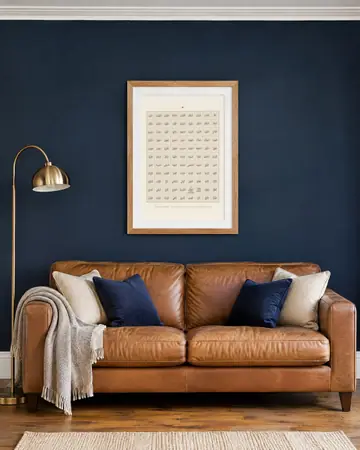
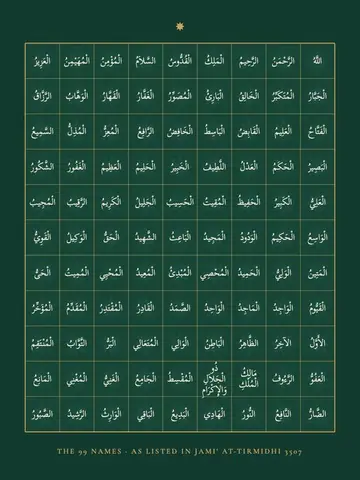
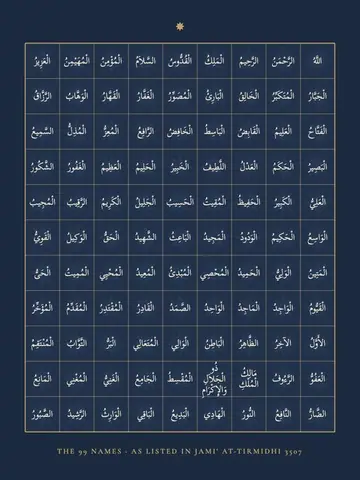
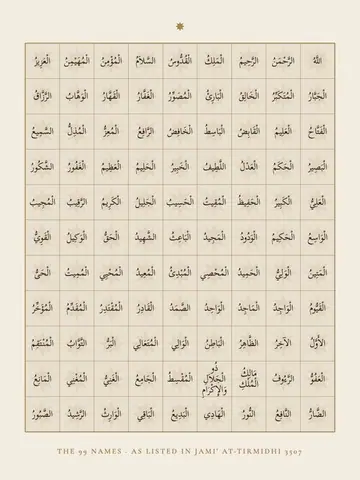 The 99 Names, creamJami' at-Tirmidhi 3507From £29Print · Hahnemühle Photo Rag 308 gsm
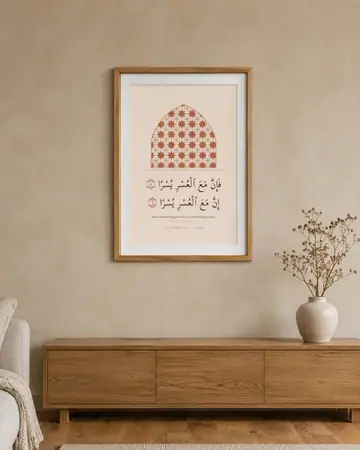
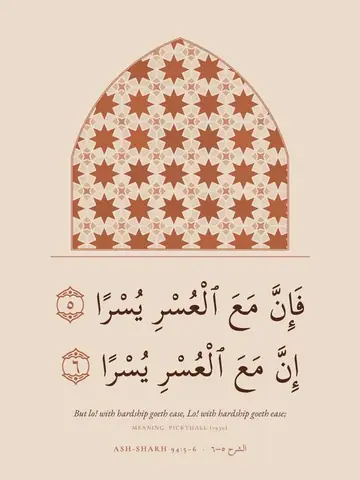 With hardship comes ease, archAsh-Sharh 94:5–6From £29Print · Hahnemühle Photo Rag 308 gsm
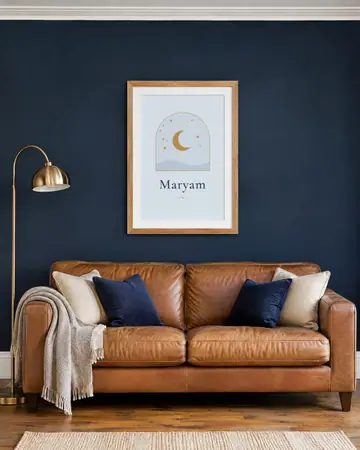
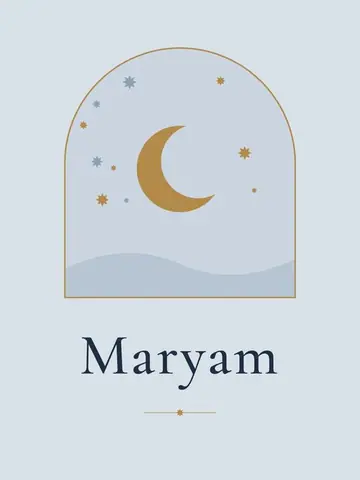 Child's name, dusk blueWith their nameFrom £29Print · Hahnemühle Photo Rag 308 gsm
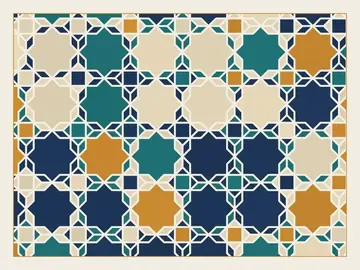
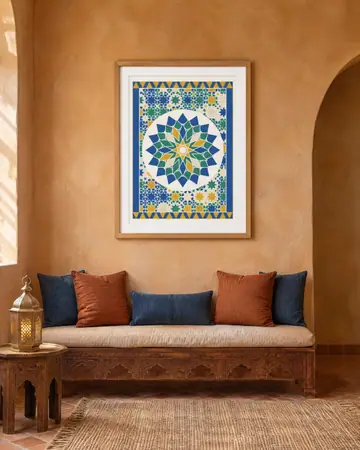 Zellige medallion, cobalt and saffronCut-tile field with a coloured 16-fold star medallion and a tiled borderFrom £29Print · Hahnemühle Photo Rag 308 gsm
By style
Kufic, Naskh, zellige and more
Sabr, patienceFrom £29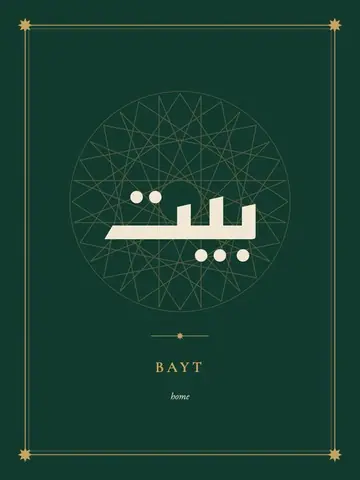 Bayt, homeFrom £29
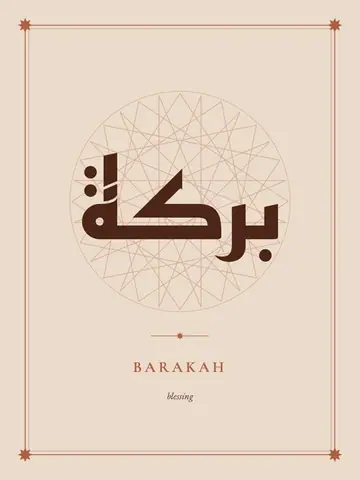 Barakah, blessingFrom £29
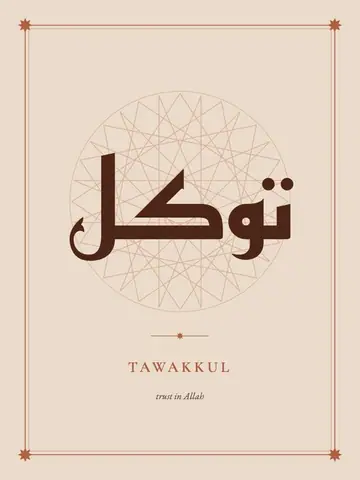 Tawakkul, trust in AllahFrom £29
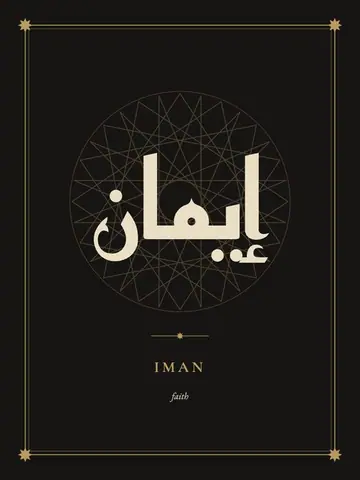 Iman, faithFrom £29
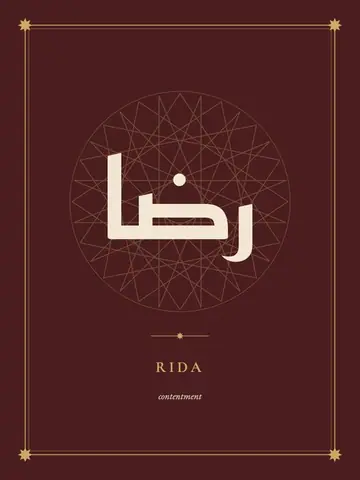 Rida, contentmentFrom £29
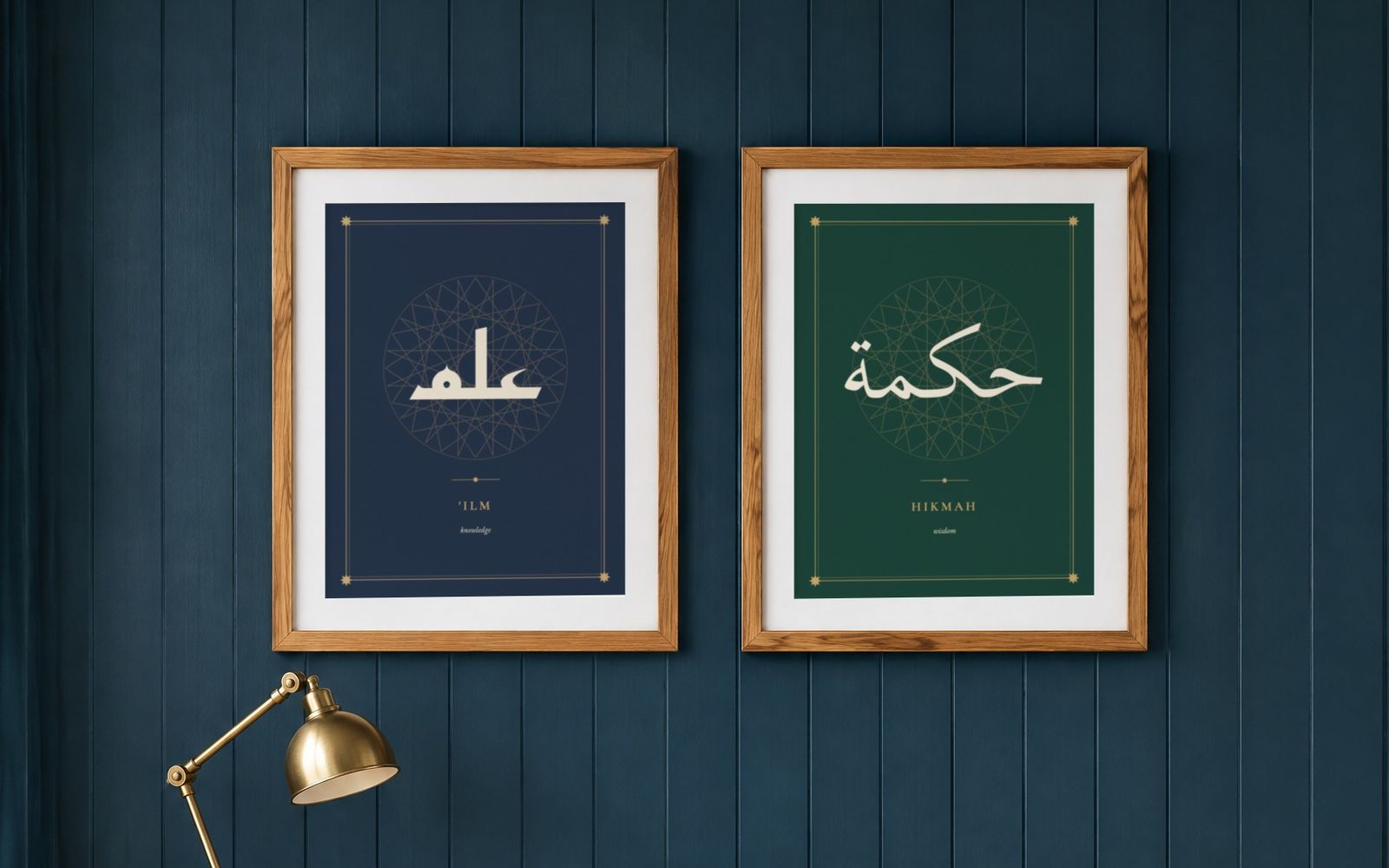
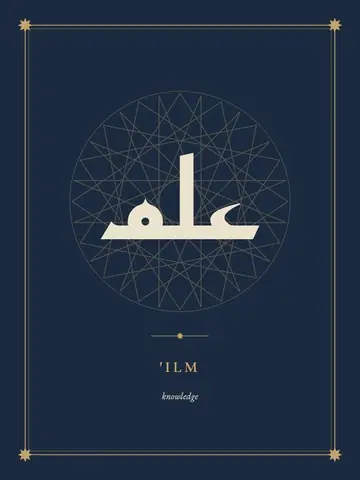 'Ilm, knowledgeFrom £29
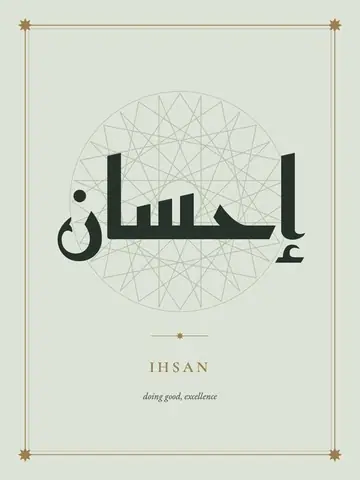 Ihsan, doing good, excellenceFrom £29
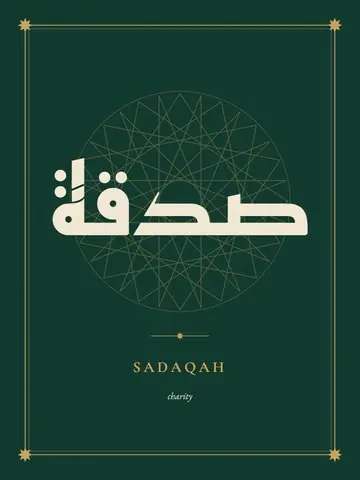 Sadaqah, charityFrom £29
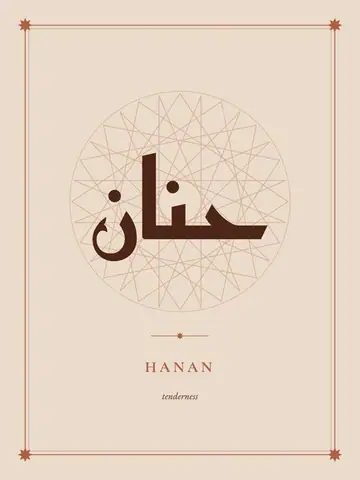 Hanan, tendernessFrom £29See all 15
Kufic designs
About Kufic lettering
Kufic is the angular, upright script of the earliest Qur'an manuscripts, such as the gold-on-blue "Blue Qur'an" of the 9th to 10th century. Our Kufi words are set in Reem Kufi, a typeface drawn from those early Qur'an models and the Fatimid Kufic grid.
Sources: The Met, object 454662, The Met, essay, Wikipedia: Kufic, Google Fonts
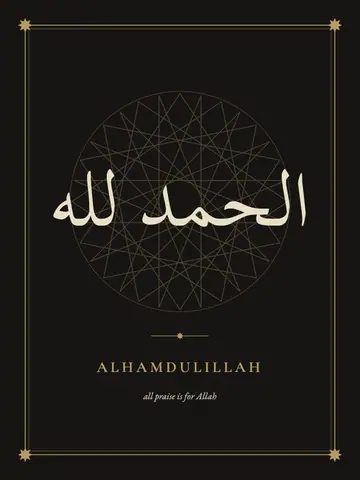 AlhamdulillahFrom £29
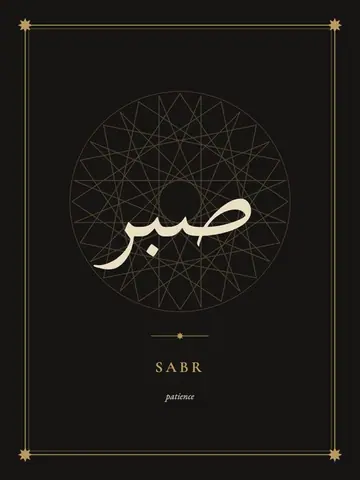 Sabr, patience (gold-tone)From £29
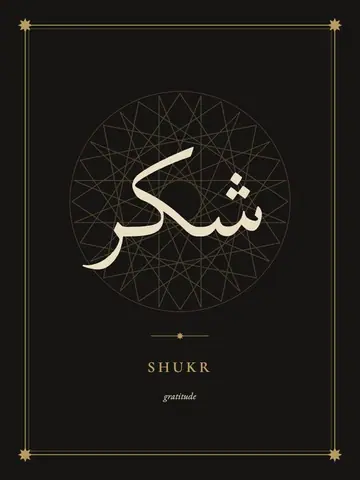 Shukr, gratitude (gold-tone)From £29
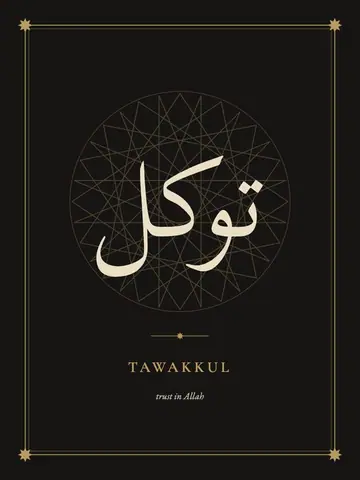 Tawakkul, trust in Allah (gold-tone)From £29
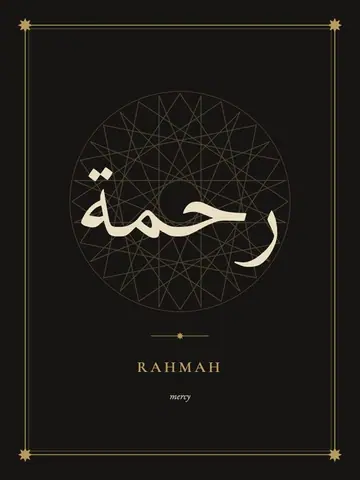 Rahmah, mercyFrom £29
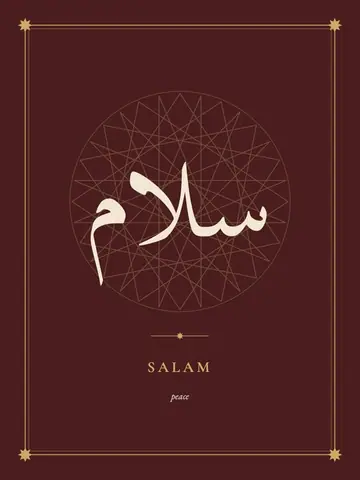 Salam, peaceFrom £29
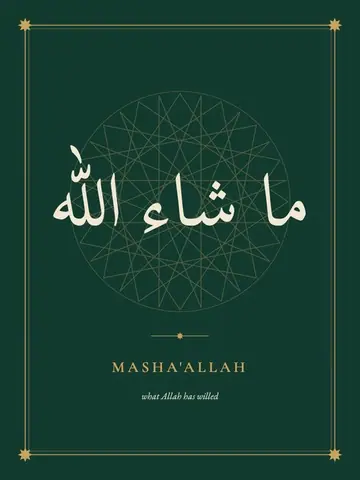 Masha'Allah, what Allah has willedFrom £29
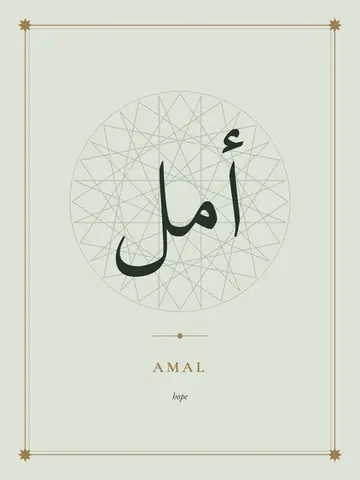 Amal, hopeFrom £29
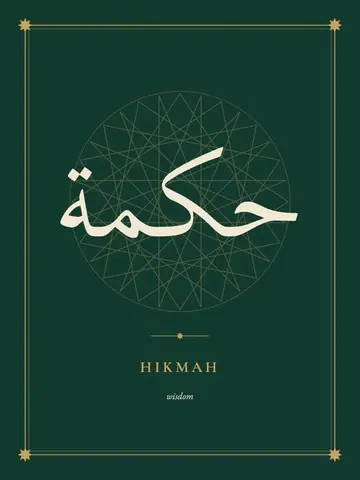 Hikmah, wisdomFrom £29
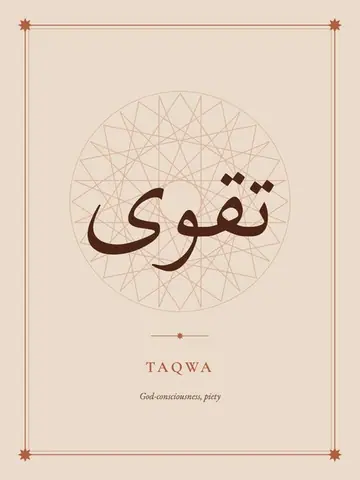 Taqwa, God-consciousness, pietyFrom £29See all 19
Naskh designs
About Naskh lettering
Naskh is a small, rounded script that is easy to read, and from the 11th century it replaced Kufic as the usual hand for copying the Qur'an. Our Naskh words are set in Scheherazade New, a traditional naskh typeface.
Sources: The Met, object 140008771, Wikipedia: Naskh (script), SIL
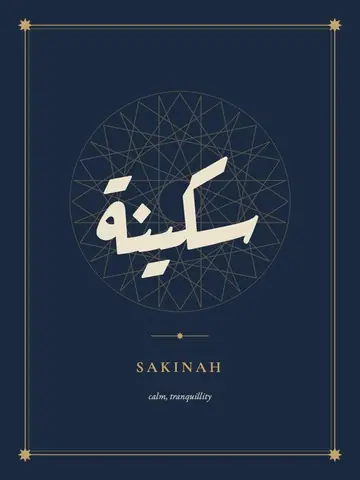 Sakinah, tranquillityFrom £29
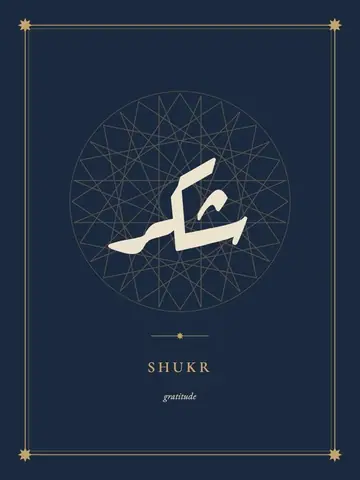 Shukr, gratitudeFrom £29
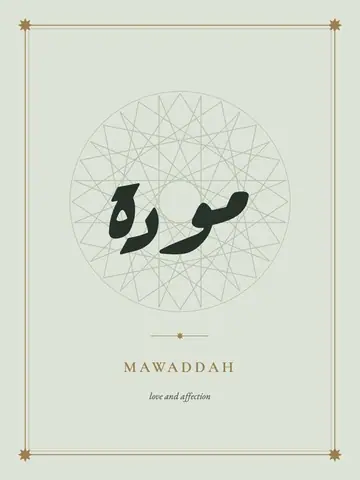 Mawaddah, love and affectionFrom £29
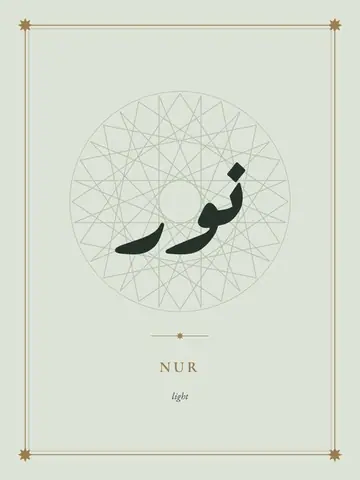 Nur, lightFrom £29
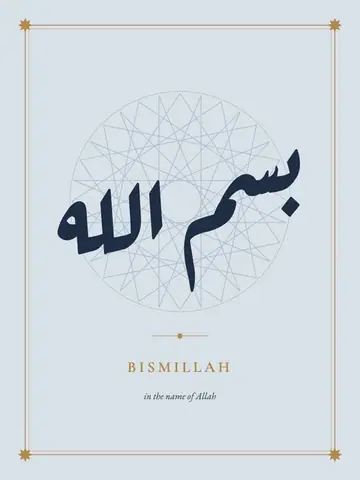 Bismillah, in the name of AllahFrom £29
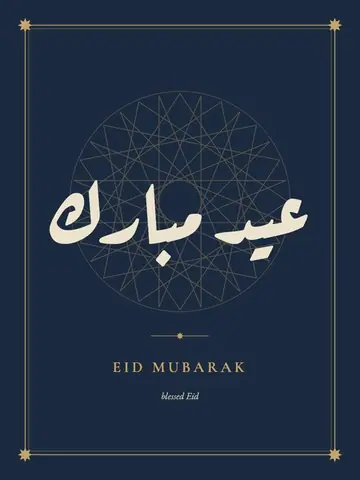 Eid Mubarak, blessed EidFrom £29
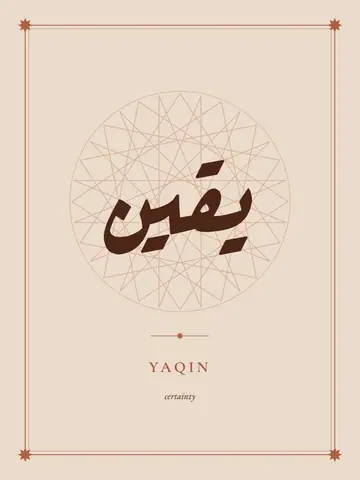 Yaqin, certaintyFrom £29
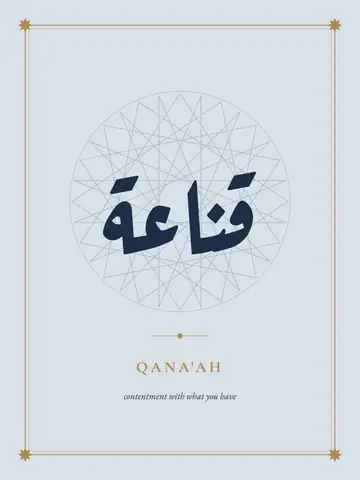 Qana'ah, contentment with what you haveFrom £29
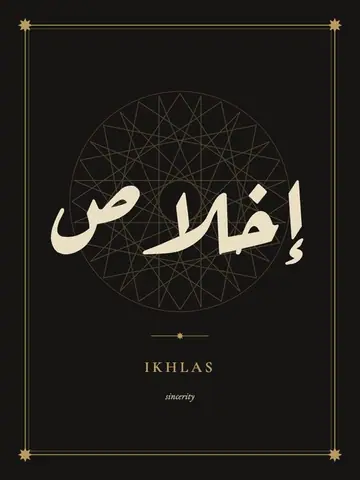 Ikhlas, sincerityFrom £29
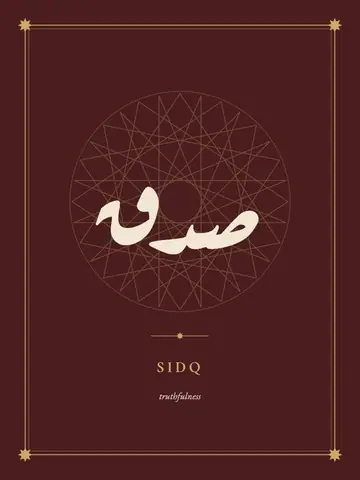 Sidq, truthfulnessFrom £29See all 16
Ruq'ah designs
About Ruq'ah lettering
Ruq'ah is the quick, plain everyday hand standardised in the 19th century by the Ottoman calligraphers Mumtaz Efendi and Mustafa Izzet Efendi, and it is the most common style of Arabic handwriting today. Our Ruq'ah words are set in Aref Ruqaa, a typeface after the classical Ruq'ah style.
Sources: Wikipedia: Ruqʿah script, Monotype, Google Fonts
Zellige medallion, cobalt and saffronFrom £29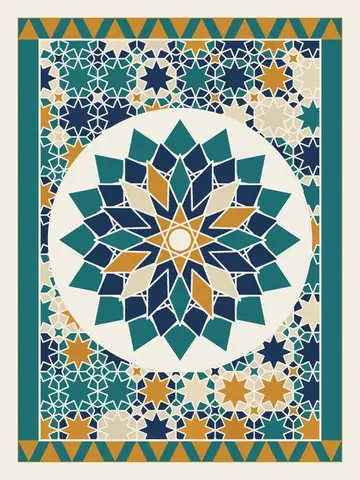 Zellige medallion, teal and navyFrom £29
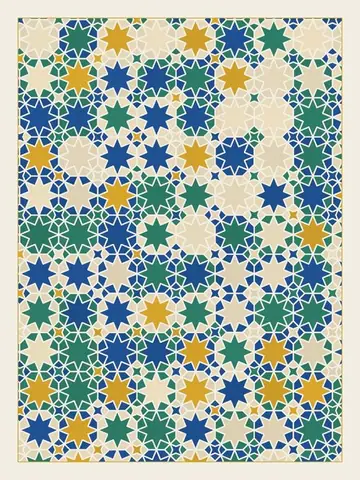 Zellige field, cobalt and greenFrom £29
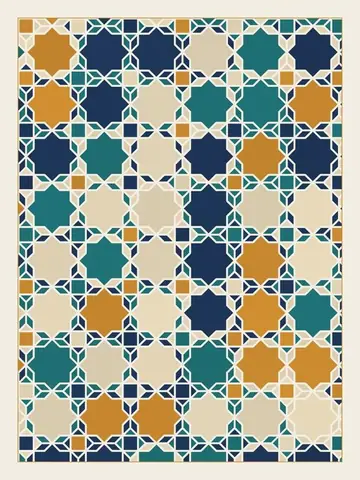 Star and cross tiles, tealFrom £29
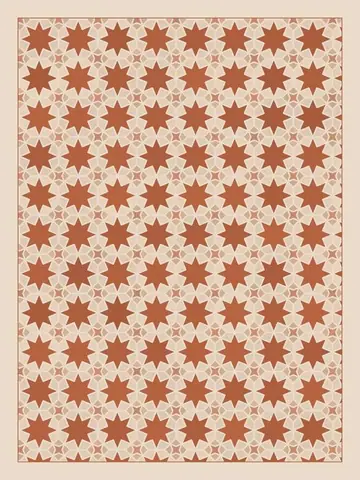 Zellige mosaicFrom £29
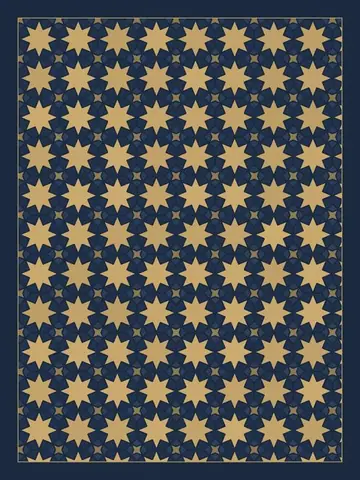 Zellige mosaic, navyFrom £29
About Moroccan zellige
Zellige is mosaic made from hand-cut pieces of glazed tile, fitted together into star patterns, and from the 14th century it lined walls, fountains and floors across the western Islamic world. In Fez it covers Marinid madrasas such as al-Attarine (1323 to 1325), and Morocco still makes it today.
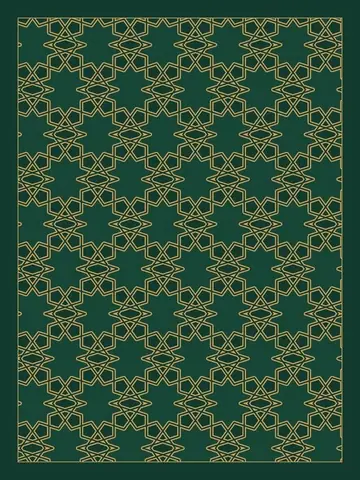
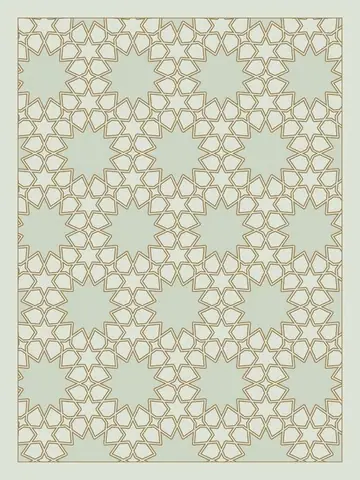
About Persian girih
Girih, Persian for "knot", is strapwork of straight interlacing lines that flourished on buildings from about 1000 to the 15th century. Ten-point patterns can be built from a few shapes, decagons, bow-ties and hexagons, as traced at the Darb-i Imam shrine in Isfahan (1453).
Sources: Wikipedia: Girih, Wikipedia: Girih tiles, Nature
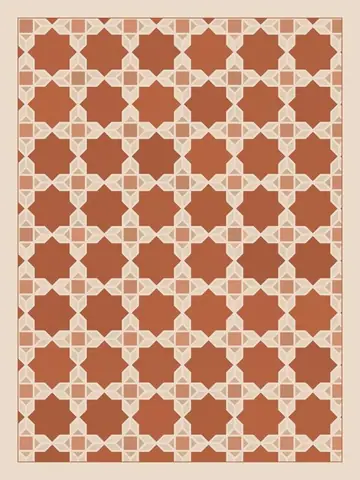
About Star and cross tiles
Panels of eight-point star tiles fitted together with crosses lined the walls of many Ilkhanid buildings in northern Iran, often lustre tiles probably made in Kashan. The Ilkhanid summer palace at Takht-i Sulaiman was dressed in them around 1270 to 1280.
Sources: The Met, essay, The Met, object 450434, The Met, object 450453, LACMA
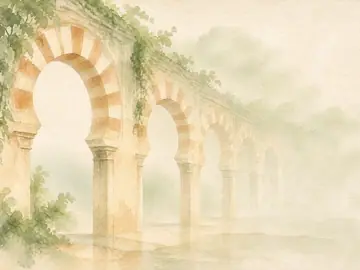
About Andalusian arches
The Great Mosque of Córdoba was begun in 785 under Abd al-Rahman I and enlarged until the late 10th century. Its rows of double arches, with horseshoe arches below, alternate red brick and white stone.
Sources: Khan Academy, Wikipedia: Mosque–Cathedral of Córdoba
Wall sets
Framed wall sets
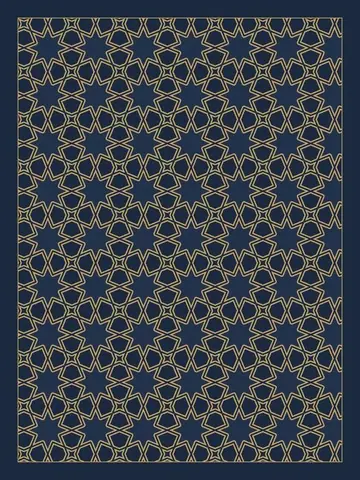
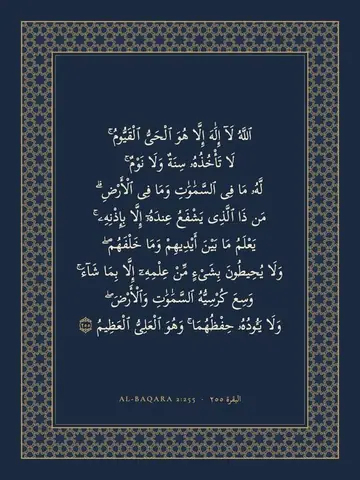
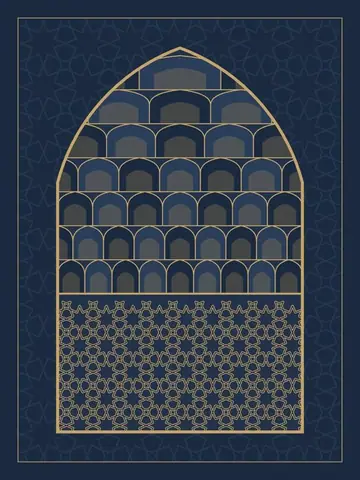
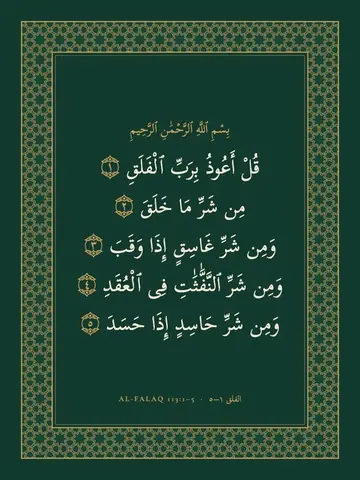
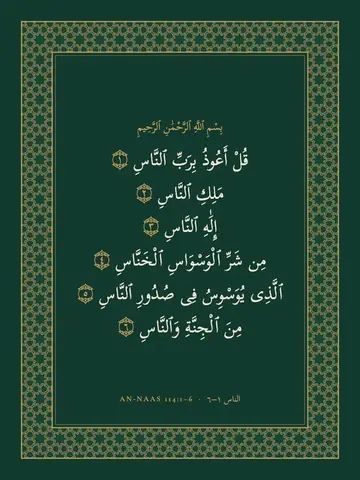
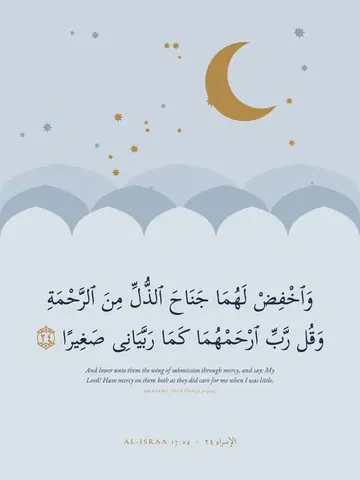
Two to five framed pieces, one price for the set. Open a set in the planner to swap a design or move a frame.
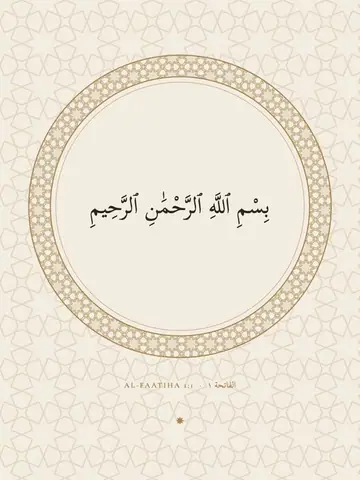
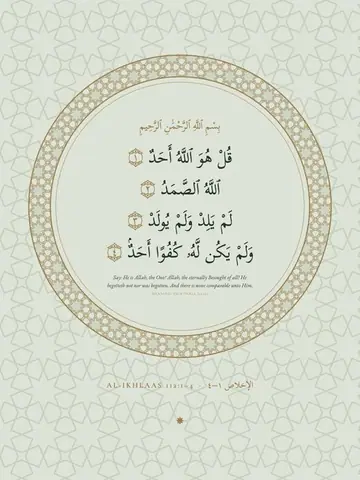
Materials and delivery
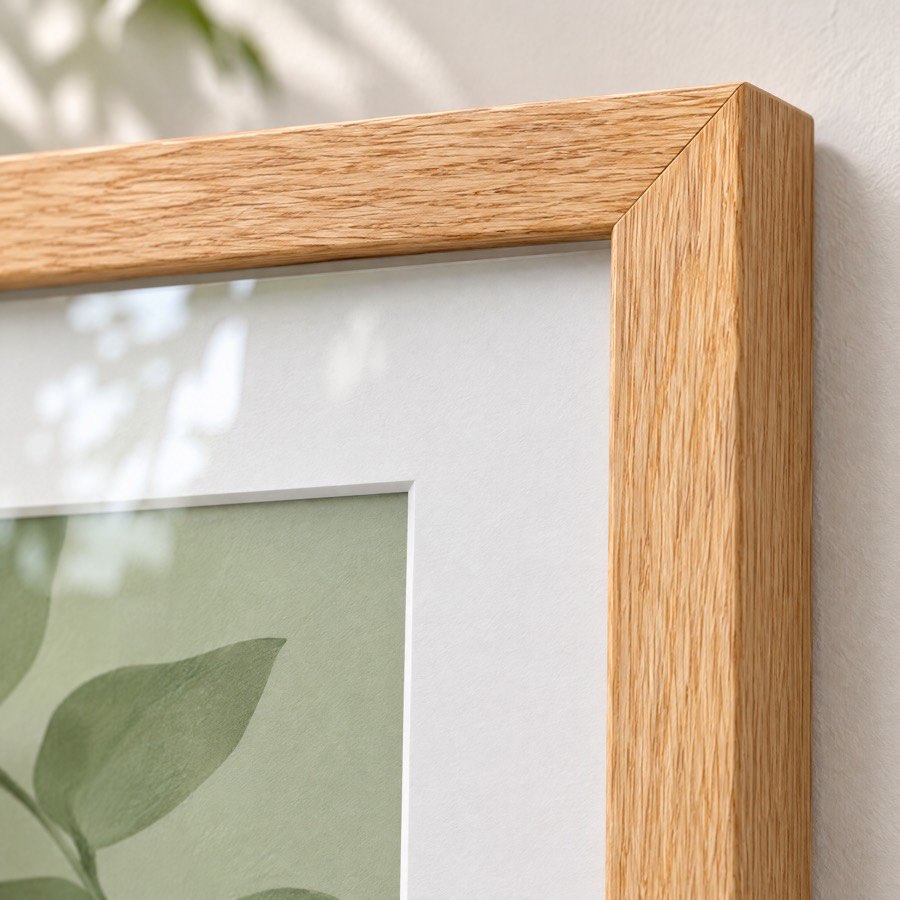 Illustration
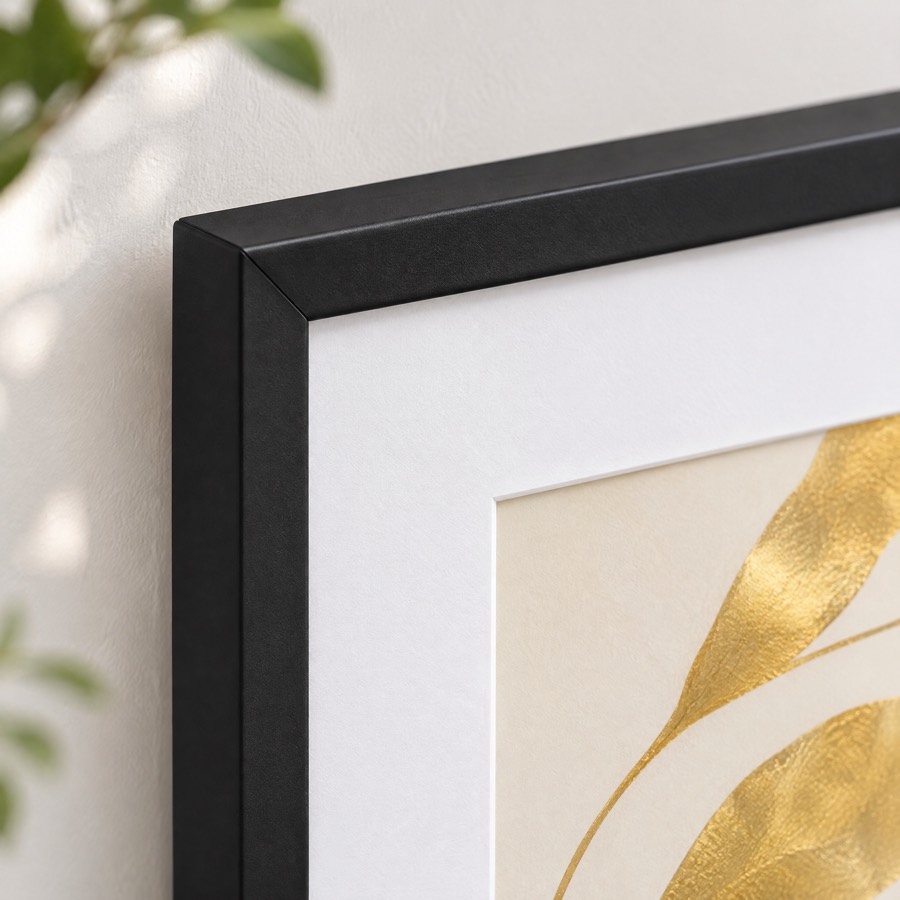 Illustration
 Illustration
- The text
- Exact Qur'an textTanzil Project, Uthmani text, unchanged.
- Made
- Printed to order in the UKFramed prints arrive with the hook fitted.
- Papers
- Fine-art printHahnemühle Photo Rag 308 gsm, 100% cotton
- Framed printEnhanced Matte Art 200 gsm paper, solid wood frame
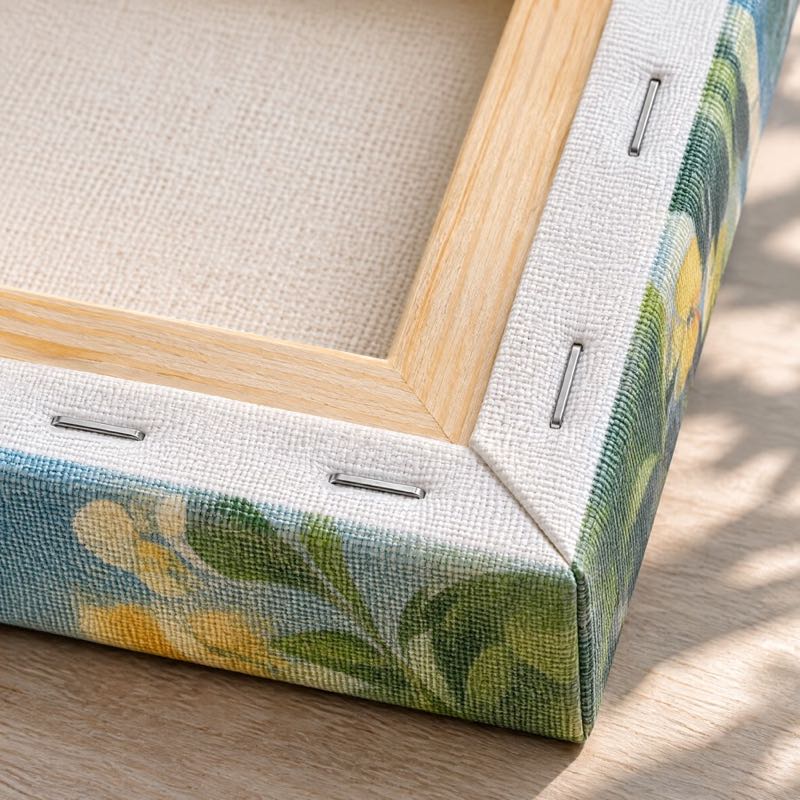
- Canvas400 gsm artist-grade canvas
- Du'a cardsMohawk 324 gsm recycled card
Where does the Arabic come from?
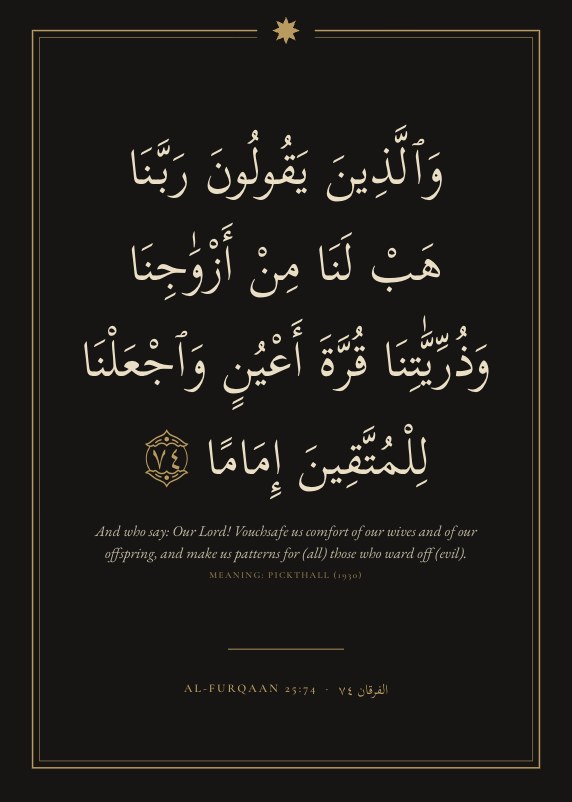
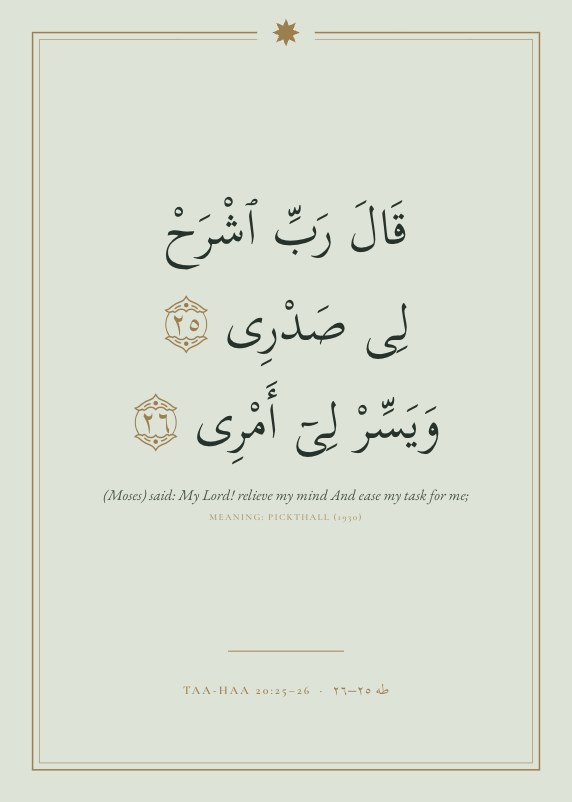
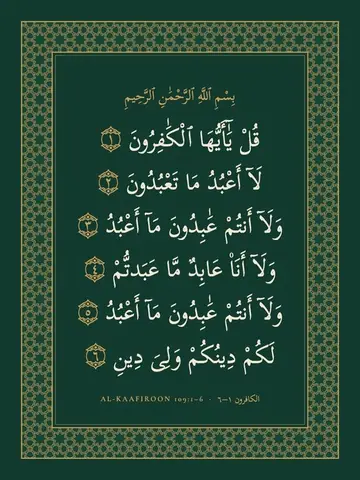
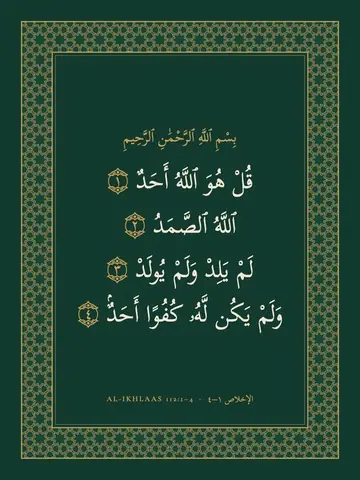
Qur'an verses come from the Tanzil Project's Uthmani text, unchanged. Arabic words are checked against a dictionary entry. The 99 Names follow Jami' at-Tirmidhi 3507. Full sources and licences.
Can I choose any verse?
Yes: any surah and up to 10 consecutive whole ayat, in Make your own. You can't type your own Arabic; the text always comes from the verified source.
Which English meaning do you use?
It's optional. Pickthall (1930) or Yusuf Ali (1934), both public domain in the UK, with the translator's name printed small under the English. A translation is a meaning, not the Qur'an itself.
How does it arrive?
Framed prints arrive with the hook fitted, ready to hang. Canvas and framed canvas arrive without fixings. Fine-art prints ship flat or rolled in a tube.
Can I return it?
Changed your mind? Return it within 14 days of delivery for a full refund. Arrived damaged or misprinted? Send us a photo within 30 days and we'll replace it free.
Anything damaged, faulty or misprinted is replaced or refunded in full. Returns policy.